Literacy
Communication and Literacy are at the heart of children’s development as confident, articulate and imaginative learners. At St Patrick’s PS, we aim to nurture pupils’ skills in talking and listening, reading and writing through rich, purposeful and engaging experiences that help them communicate with clarity, creativity and confidence.
In the Foundation Stage, we focus on developing early literacy in meaningful contexts. We use Big Cat Letters and Sounds alongside our linguistic phonics programme to build strong early reading and decoding skills. This combination ensures children develop secure phonological awareness and confidence in blending, segmenting and early comprehension. Our updated Big Cat reading scheme includes modern, high-quality texts that celebrate cultural diversity, positive representation and wellbeing.
In Key Stage 1 and Key Stage 2, pupils continue to access the Big Cat reading scheme supported by a wide range of additional fiction and non-fiction texts. This exposure encourages pupils to become enthusiastic, independent and lifelong readers. In KS2, children further enhance their comprehension and thinking skills through Reciprocal Reading, using a range of novels to practise predicting, clarifying, questioning and summarising. This approach strengthens understanding, promotes collaboration and builds deeper engagement with texts.
Across the school, children enjoy daily reading opportunities and have access to carefully curated classroom libraries as well as the main school library. Listening centres, digital reading materials and a variety of structured literacy resources enrich and support learning at every stage.
At St Patrick’s PS, we are committed to equipping every child with the literacy skills needed to flourish academically, socially and personally. Our modernised reading provision, diverse and inclusive texts, and evidence-based teaching approaches ensure all pupils are inspired, challenged and empowered as readers, writers and thinkers.
Vocabulary and Spoken Language
Reading


At St. Patrick's, we are passionate about developing confident, fluent readers who truly enjoy reading. We believe that reading opens doors—supporting learning across the curriculum and nurturing imagination, curiosity and wellbeing.
Our Reading Resources and Approaches
To support early reading, children in Primary 1 and Primary 2 follow the Big Cat Letters and Sounds phonics reading scheme. These books are carefully matched to each child’s phonics stage so they can practise the sounds and patterns they are learning in class.
As pupils move into KS1 and KS2, they continue to read a wide range of Big Cat Guided Reading books that help build comprehension, vocabulary and reading stamina.
We ensure that all learners have access to books that meet their needs. For children who benefit from dyslexia?friendly design and layout, we use Barrington Stoke titles within our SEN provision.
Older pupils in KS2 also take part in Reciprocal Reading using a variety of novels. This approach teaches children how to question, predict, clarify and summarise as they read—skills that help them become thoughtful, independent readers.
Developing a Love of Reading
A key priority currently in our current School Development Plan is to strengthen a culture of reading for pleasure across the school. We want every child to see reading as something to enjoy, share and celebrate.
To support this, we are:
- Broadening our class libraries to include rich, diverse and inclusive texts that represent a wide range of cultures, experiences and voices.
- Using book blanket activities, where children explore and choose from a wide spread of appealing books laid out for browsing.
- Encouraging home–school reading connections through Reading Rivers, where children reflect on and share the types of reading they do in their everyday lives.
- Involving pupils in book recommendation sessions, helping them talk confidently about the books they love.
- Offering book taster sessions, giving children the chance to sample new authors, genres and topics.
Across the year groups, our aim is clear: to help children discover the joy of reading and to ensure every child can see themselves—and new possibilities—reflected in the books they read.
Phonics
Our Approach to Phonics and Early Reading
We use a Structured Literacy approach to teach children how to read and spell. This means learning is clear, carefully sequenced, and built step?by?step, with teachers continually checking children’s progress and adapting lessons to their needs. We teach the building blocks of language directly so every child can become a confident, capable reader.
What Children Learn
We help children understand how spoken and written language work by teaching a wide range of essential skills:
- Phonological awareness – noticing the sounds in spoken language, such as rhyming, counting syllables, hearing the difference between sounds, and breaking sentences into words.
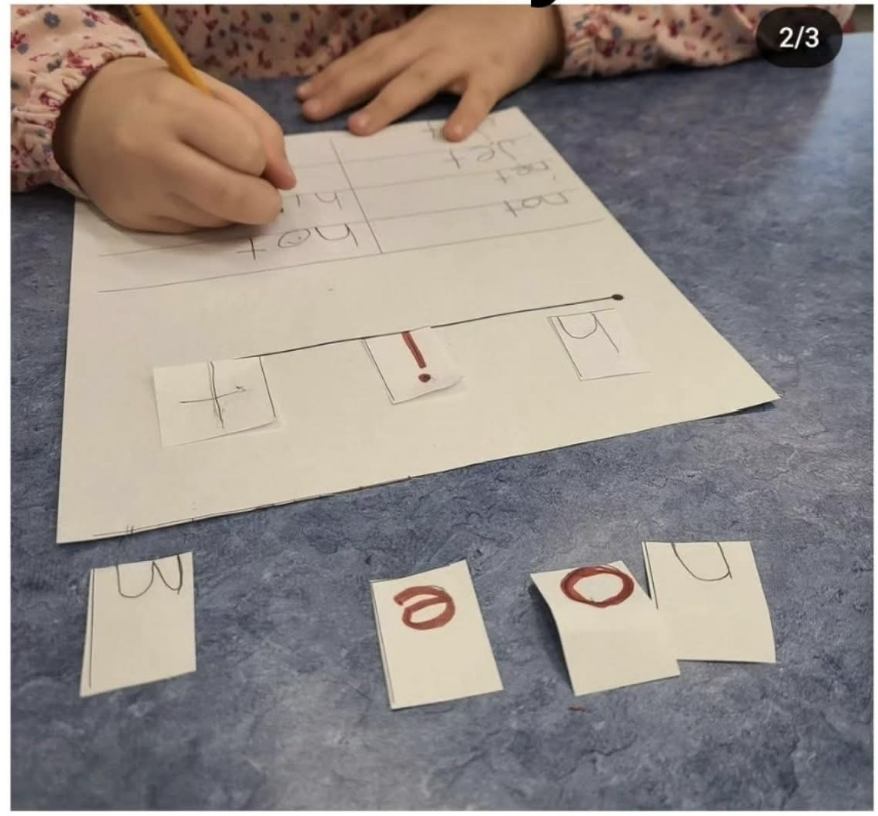
- Phonemic awareness – working with the smallest sounds in words. Children practise blending sounds together (c?a?t → cat), segmenting them (cat → c?a?t), and changing sounds to make new words.
- Phonics – learning how letters and groups of letters represent sounds, and using this knowledge to read new words.
- Spelling and encoding – using sound?to?letter knowledge to build and spell words.
- Morphology – understanding word parts such as prefixes, suffixes and roots, which helps children decode and spell longer words.
- Syllable types and patterns – learning how longer words are organised.
- Word recognition, fluency, vocabulary, and comprehension – building all the skills needed for confident and meaningful reading.
How We Teach in the Early Years
In Primary 1, we start with what children can hear in their own speech. This foundation helps them make strong links between spoken and written language.
Strand 1: Developing listening skills, memory, concentration, and sequencing.
Strand 2: Exploring sounds through rhymes, syllables, and oral blending and segmenting.
Strand 3: Moving towards print by connecting sounds to letters and understanding what a “word” looks like on the page.
Children also learn to remember sounds, rhymes and stories, spot rhyming words, and recognise different letter shapes. Regular practice across all strands helps them grow in confidence.
Key Phonological Skills We Build
- Segmenting: splitting words into individual sounds.
- Blending: pushing sounds together to read a word.
- Manipulating sounds: swapping or removing sounds to make new words (e.g., stop without the s, or changing ten to pen).
Understanding How Words Work
We teach children five key principles that underpin our writing system:
- Sounds are represented by letters.
- Longer words are made up of groups of sounds.
- One sound can be written in different ways (e.g., no, snow, toe).
- One spelling can represent different sounds (e.g., snow vs. cow).
- A sound may be spelled with one or more letters.
Literacy Workshop for Parents
Primary 1 and 2 parents were invited recently to an information session regarding our phonics programme.
The purpose of the workshop was to:
- Provide parents with information on phonics, reading and writing in line with the NI Curriculum.
- Further parents' understanding of St. Patrick's approach to teaching phonics.
- Give parents a better understanding of how to support their child at home.
Please find below a link which will open a summarised version of the presentation used at the parents' workshop.
Writing


At St Patrick’s PS, we are committed to developing confident, creative and capable writers. We believe that writing is an essential tool for communication, imagination and self?expression, and we provide rich opportunities for pupils to write with purpose, clarity and enjoyment across the curriculum.
Writing Genres:
Throughout the school, children learn to write in a wide range of genres, including:
- Recount
- Procedural / Instructional
- Explanation
- Persuasive
- Report
- Narrative
By exploring each writing type in depth, pupils learn how different genres work and how writers tailor their style, structure and vocabulary to suit their audience and purpose.
Writing Process:
To support pupils in becoming skilled, independent writers, we follow a structured and research?informed writing process. This includes:
- Analysing high-quality examples of each writing genre
- Identifying key features such as structure, language choices and tone
- Problem-solving activities to explore what makes writing effective
- Shared writing, where teachers model the writing process
- Guided writing, giving pupils targeted support to improve their skills
- Completing every unit with an independent writing task to demonstrate understanding
Through this approach, children gain a clear understanding of each genre and learn how to apply their skills confidently in a range of contexts.
Self-Assessment and Growth:
Children regularly engage in self-assessment, using the key features of each writing type to reflect on their work, identify areas of strength and set personal targets. This promotes independence, ownership of learning and a growth mindset.
Narrative Writing:
Narrative is a major focus within our writing curriculum. Pupils explore:
- Character development
- Setting description
- Effective openings and satisfying conclusions
- Creating tension and resolving problems
- Story structure using tools such as the Story Mountain
These elements help children craft engaging, imaginative stories with clear structure and purpose.
Poetry
Poetry is an important and exciting part of our writing curriculum. It provides pupils with opportunities to play with language, explore rhythm and sound, express emotion, and experiment creatively with words. Poetry supports vocabulary development, imagination, and a deeper appreciation of how language can be used for effect.
Children explore a variety of poetry styles, including:
- Sense poems
- Acrostic poems
- Haikus
- Limericks
- Rhyme and free verse
- Pattern and list poems
Pupils read and respond to a range of poems, explore the work of different poets, and discuss how poets use imagery, rhythm, word choice and structure to create meaning. They then apply these insights to compose their own poems—experimenting with language, personal voice and creativity.
Poetry lessons encourage pupils to listen, perform, share and celebrate each other’s work, building confidence and enjoyment. Poetry is displayed proudly throughout the school and often linked to celebrations, seasons, themes and cross-curricular learning.
Celebrating Writing:
Writing is valued and celebrated throughout the school. Pupils’ work is showcased through:
- High-quality classroom and corridor displays
- Cross-curricular writing opportunities in subjects such as RE, WAU and PDMU
- Published pieces, performances and whole-school celebrations of learning
We believe that celebrating pupils’ writing builds confidence, pride and motivation to continually develop as writers.
Celebrating Literacy


National Poetry Day 2025
On 10th October 2025, St Patrick’s Primary School proudly celebrated National Poetry Day, embracing this year’s theme of Play with creativity, imagination and joy. Every class from P1 to P7 took part in poetry activities designed to inspire a love of language and develop pupils’ confidence as young poets.
Throughout the school, children explored the theme of Play through a wide range of poetry-writing opportunities. Pupils enjoyed engaging in playful, language-rich activities such as shared poetry writing, list poems, simile poems, string poems, patterned verses and rhythm games. Each class approached the theme in age-appropriate ways, offering pupils the chance to experiment with words, structure and imagery while celebrating the fun and freedom of poetic expression.
Teachers guided pupils in discussing what “play” means to them—whether outdoor adventures, imagination, friendship or creativity—and these ideas became the foundation for beautifully crafted poems. The activities encouraged pupils to listen, collaborate, perform and share their writing, helping them develop confidence and a deeper appreciation for poetry.
To celebrate the children’s achievements, a vibrant display of work was created on the Literacy Board outside the Assembly Hall. This whole-school showcase provided a lovely opportunity to observe continuity and progression from P1 to P7, highlighting how pupils develop their poetic voice, language choices and creativity as they move through the school. Staff, pupils, families and visitors enjoyed viewing the display, which captured the joy, imagination and playfulness at the heart of National Poetry Day.
The celebration reflected our school’s commitment to fostering creativity, promoting a love of language and providing every child with opportunities to express themselves. National Poetry Day 2025 was a wonderful success, filled with laughter, imagination and the delight of children discovering the power and playfulness of poetry.
National Storytelling Week 2nd-8th February 2026
World Book Day 5th March 2026
On World Book Day 2026, St Patrick’s Primary School was filled with excitement, creativity and a real sense of community as pupils and staff celebrated their love of books. Children arrived dressed as their favourite book characters, bringing stories to life throughout the school and sparking lots of discussion, imagination and laughter.
Throughout the day, pupils took part in a variety of book-themed activities designed to promote enjoyment, curiosity and a love for reading. These included:
- Book Blankets, where children explored a wide selection of stories laid out for browsing.
- Book Tasters, offering the chance to sample new authors and genres.
- Teacher and pupil book recommendations, encouraging children to share books they love.
One of the highlights of the day was the Reading Buddy programme, which paired older pupils in Upper Key Stage 2 with younger children in Foundation Stage and Key Stage 1. Buddies read stories together, talked about characters and shared favourite books. Many classes took the opportunity to enjoy this time outdoors in the spring sunshine, making use of our school’s outdoor learning areas to create a relaxed, joyful reading atmosphere.
We were delighted to welcome sixth-form pupils from Sullivan Upper School, who visited our P2/3 and P3 classes to read stories and lead engaging book-related activities. Their enthusiasm and care created memorable reading experiences and inspired our younger pupils as they explored new stories together.
The day was a wonderful celebration of books and the power of reading. Classrooms, corridors and outdoor spaces were filled with storytelling, imagination and shared enjoyment. Pupils embraced the magic of books—dressing up, exploring new authors, sharing favourite stories and connecting with others through reading.
World Book Day 2026 was a tremendous success at St Patrick’s PS. It showcased our strong reading culture, our commitment to developing enthusiastic readers, and the joy that comes from celebrating books as a whole-school community.
Assessment in Literacy
At St. Patrick's, assessment is an important part of ensuring every child makes strong progress in reading and writing. We use a combination of formative assessment (ongoing, day-to-day checks) and summative assessment (formal assessments used at key points in the year) to build a clear picture of each child’s literacy development.
Formative Assessment – Ongoing, Everyday Learning
Teachers assess children’s learning continuously throughout literacy lessons. This helps us identify strengths, address misconceptions and adapt teaching to meet individual needs. Our formative assessment includes:
- Teacher observations – noticing how children read, write, talk and engage with tasks.
- Running Records – short assessments that capture how accurately and fluently a child reads.
- Weekly phonics assessments – checking how well children can recognise sounds, blend them and apply their phonics knowledge in reading and spelling.
- Daily feedback on written work – giving pupils immediate guidance to help them improve their writing, spelling and sentence structure.
These ongoing assessments allow us to respond quickly and support children as soon as they need it.
Summative Assessment – Checking Progress Over Time
From P3 to P7, pupils complete the GL Standardised Literacy Assessments each year. These nationally benchmarked tests assess key areas such as:
- Grammar
- Spelling
- Reading comprehension
The results give us a reliable measure of each child’s progress and help us identify where extra support or challenge may be needed.
Supporting Literacy at Home


Read with your child every day.
Make reading part of your daily routine—bedtime, after school, or whenever works for your family. Let your child choose the book to build motivation. Take turns reading pages, talk about the pictures, predict what might happen next, and ask simple questions like “Why do you think that character felt that way?” This develops comprehension and confidence. Creating a Reading River is a fun way to explore your child’s favourite books and genres.
Practice phonics skills.
Use short, fun activities that help children connect letters and sounds. Try spotting letters on signs while walking, playing “I spy” with sounds (“I spy something beginning with /s/”), or using magnetic letters to build simple words. Repeat sounds often, keep it light, and celebrate progress.
Encourage frequent writing.
Give your child lots of chances to write—shopping lists, birthday cards, labels for their drawings, or a simple diary. Provide pencils, markers, and paper somewhere easily accessible. Don’t worry about spelling being perfect; focus on getting ideas down and praising effort.
Support vocabulary growth.
Talk to your child throughout the day about what you’re doing—cooking, tidying, visiting places. Introduce new words naturally (“This pan is shallow, but that one is deep”) and use them in different contexts. Read a variety of books to expose them to new language.
Build phonological awareness.
Help your child listen carefully to sounds in words. Play games like I hear with my little ear something beginning with ‘ssss’ (use the sound, rather than the letter name), clapping syllables, rhyming pairs (cat–hat), or breaking words into sounds (cat). Sing nursery rhymes and chant rhyming songs together—they build strong early reading foundations.
Review and revisit regularly.
Children learn best through repetition. Reread favourite stories, revisit tricky phonics sounds, or go back to earlier spellings. You might say, “Let’s check if you remember this sound from yesterday!” Short, repeated practice builds confidence and longterm memory.
Create a print-rich home environment.
Place books in different rooms, keep writing materials easily available, and display written words around your home—labels on toy boxes, a calendar, or a family message board. Seeing print everywhere helps children understand that reading and writing are part of everyday life.
Model a love of reading.
Let your child see you reading—books, recipes, magazines—anything! Talk about what you enjoy in a story or why you’re interested in an article. Children are more likely to read when they see adults doing it willingly and joyfully.
Follow St. Patrick’s approach.
Encourage curiosity, independence, and resilience in line with the school’s values. Support the methods your child’s teacher uses (phonics routines, reading strategies) so home and school learning feel consistent. If you’re unsure about something, ask the teacher—they’re happy to help.
Keep it positive and pressure-free!
Celebrate small wins and avoid turning reading into a battle. If your child is tired or frustrated, take a break. Use praise generously—“I love how you tried that tricky word!” The goal is to build confidence, enjoyment, and a lifelong love of learning.
Curriculum Overview / Progression
Inclusion and Support


At St. Patrick's, we are committed to ensuring that every child becomes a confident reader and writer. Literacy learning is inclusive by design, with support available in every classroom and additional help for pupils who need it.
Support for All Learners
All pupils receive in-class support that is carefully differentiated to meet their individual needs. Teachers use a wide range of resources, scaffolds and strategies to help children with reading, writing and spelling. This may include word banks, sentence starters, vocabulary mats, multisensory materials and structured writing frames.
In KS2, we also make use of assistive technology for pupils with literacy difficulties, such as those with dyslexia. This may include tools that support reading, spelling, planning and organising written work, allowing children to access the curriculum with greater confidence and independence.
Targeted Support for SEN Pupils
For children at SEN Stage 1, additional help is provided through small-group or individual withdrawal sessions in our Rainbow Room. Here, pupils work on personalised targets that focus on their specific literacy difficulties. These sessions are designed to build skills, confidence and fluency through tailored activities and structured programmes.
Time to Read Partnership
We are proud to work in partnership with Business in the Community NI to offer Time to Read sessions for pupils in P4 and P5. Each week, our trained volunteer, Ellen, spends time reading one-to-one and in small groups with children, helping to develop their confidence, fluency and enjoyment of reading.
Home Learning Links
Useful Links and Websites
This is the website for the National Literacy Trust which supports the development of literacy skills from birth through to adulthood. There is a dedicated parents’ section where you can find suggestions for activities to do with your child. This can be accessed here: https://wordsforlife.org.uk/
This is the website for Literacy Shed where you can find a wealth of visual literacy activities and resources to engage children.
https://www.bbc.co.uk/bitesize/subjects/zmbff4j
BBC Bitesize for Foundation Stage Language and Literacy- Talking and Listening, Reading and Writing videos and activities.
https://ictgames.com/mobilePage/literacy.html
Phonics games for Foundation Stage on ICT Games website
https://www.starfall.com/h/index-kindergarten.php
Starfall: Learn to Read with Phonics. American website with phonics games for Foundation Stage (In Kindergarten section)